
Above-Ground vs Underground LPG Tanks: Which Is Better?
If you are choosing a new LPG setup, one of the first decisions is whether an above ground vs underground LPG tank is the better fit for your property. Both options can provide reliable off-grid heating and hot water, but they differ in appearance, installation, access and long-term practicality.
For some homeowners, the main concern is how visible the tank will be in the garden. For others, it is more about ground conditions, access for installation or the overall cost of the project. The best option usually depends on the property itself as much as personal preference.
This guide looks at the main differences between above-ground and underground LPG tanks so you can decide which setup is likely to suit your home better.
Appearance and space
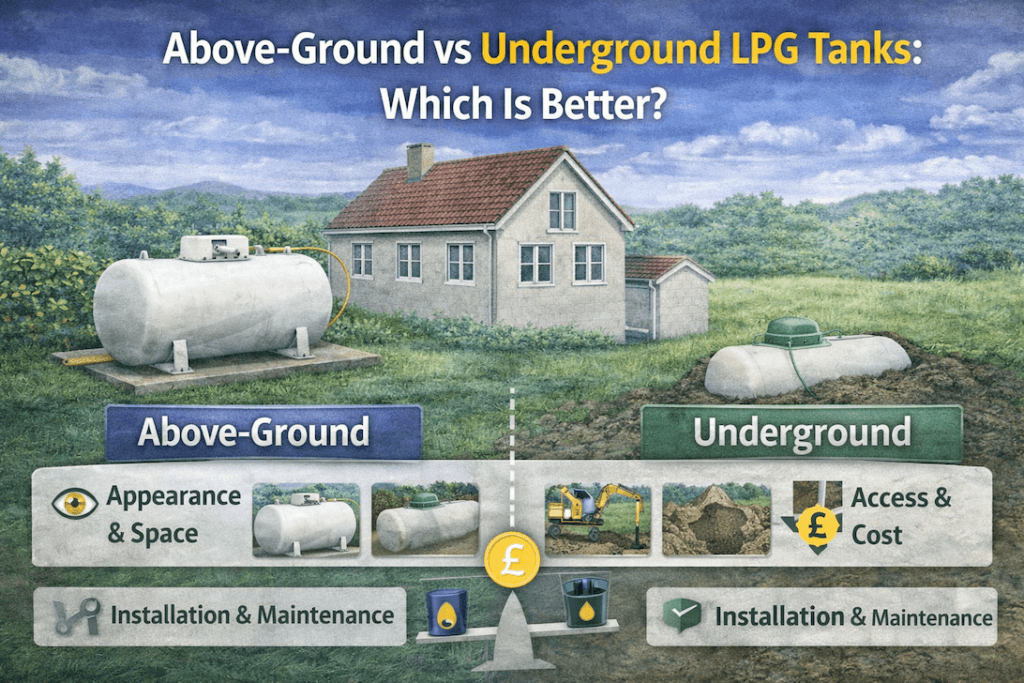
For many households, appearance is the biggest difference. An above-ground tank is clearly visible, usually positioned on a concrete base in an open and well-ventilated area. That makes it easier to access and inspect, but some homeowners do not like the visual impact, especially in a carefully landscaped garden.
An underground or buried LPG tank is much less noticeable because most of the tank sits below ground level, with only the lid and fittings visible above the surface. This can make it a more attractive option where appearance matters or where the homeowner wants to preserve open garden space.
In simple terms:
- Above-ground tanks are more visible but usually simpler in layout
- Underground tanks are more discreet and often preferred where appearance is a priority
If your outdoor space is prominent, overlooked or carefully designed, the visual advantage of an underground tank can be a major factor.
Installation and maintenance
Installation is one of the main differences between the two options. Above-ground tanks are usually simpler to install because they do not require excavation. The tank is placed onto a prepared base and connected as part of the installation process.
An underground tank typically involves more work at the start. Ground excavation is needed, and the site must be suitable for that type of installation. This often makes the installation process more involved than for an above-ground tank.
Maintenance can also feel different from a homeowner’s point of view. An above-ground tank is easy to see, which can make visual checks and access simpler. An underground tank is less visually intrusive, but the below-ground setup means the lid, chamber and surrounding area need to remain accessible and properly maintained.
When weighing up the underground LPG tank pros and cons, homeowners often see it this way:
- Above-ground: simpler installation and straightforward access
- Underground: neater finish but more involved installation
Access and ground conditions
Not every property is equally suited to both tank types. Access for installation and delivery is always important, but underground tanks also depend heavily on the site conditions.
Things that may affect the decision include:
- whether there is enough space for excavation
- the shape and slope of the garden
- ground conditions and drainage
- access for machinery during installation
- safe access for future filling and maintenance
Above-ground tanks are often the more straightforward choice where the site is awkward, access is limited or excavation would be difficult. Underground tanks can work very well, but the ground and layout need to be suitable.
This is why a proper site assessment matters. A homeowner may prefer an underground tank in principle, but the property itself may make an above-ground tank the more practical solution.
Cost considerations
Cost is another factor. In many cases, an above-ground tank is the simpler and more economical option to install because it usually involves less groundwork. An underground tank may have a higher upfront cost due to excavation and the additional work involved in fitting it properly.
However, the cheapest option is not always the best one for every property. Some homeowners are happy to pay more for an underground installation if reducing the visual impact is important to them.
When comparing costs, it helps to look at:
- initial installation work
- ground preparation requirements
- access for machinery and fitting
- the long-term suitability of the location
Rather than focusing only on the first installation quote, it is worth considering which option is the best fit for the property over time.
Which type suits which property?
There is no universal winner in the above ground vs underground LPG tank decision. Each option tends to suit different types of home and different homeowner priorities.
An above-ground tank may suit you better if:
- you want a simpler installation
- access for excavation is limited
- you are less concerned about the tank being visible
- you want a practical and straightforward setup
An underground tank may suit you better if:
- appearance is a major priority
- you want to reduce the visible impact of the tank
- your site is suitable for excavation and below-ground installation
- you are prepared for a potentially more involved installation process
In many cases, the best answer comes from balancing appearance, practicality and site conditions rather than choosing on looks alone.
Choosing the right LPG tank for your home
Both above-ground and underground tanks can work well when properly sited and installed. The right choice depends on what matters most to you, whether that is ease of installation, lower upfront cost, better garden appearance or the specific layout of your property.
If you are unsure, the most useful next step is to compare local options and get advice based on your own site rather than relying on general preference alone.
Compare LPG options for your property
If you are considering a new LPG setup, comparing local supply options can help you understand what may be suitable for your home and site.
Check local LPG quotes in your area and explore your options.