
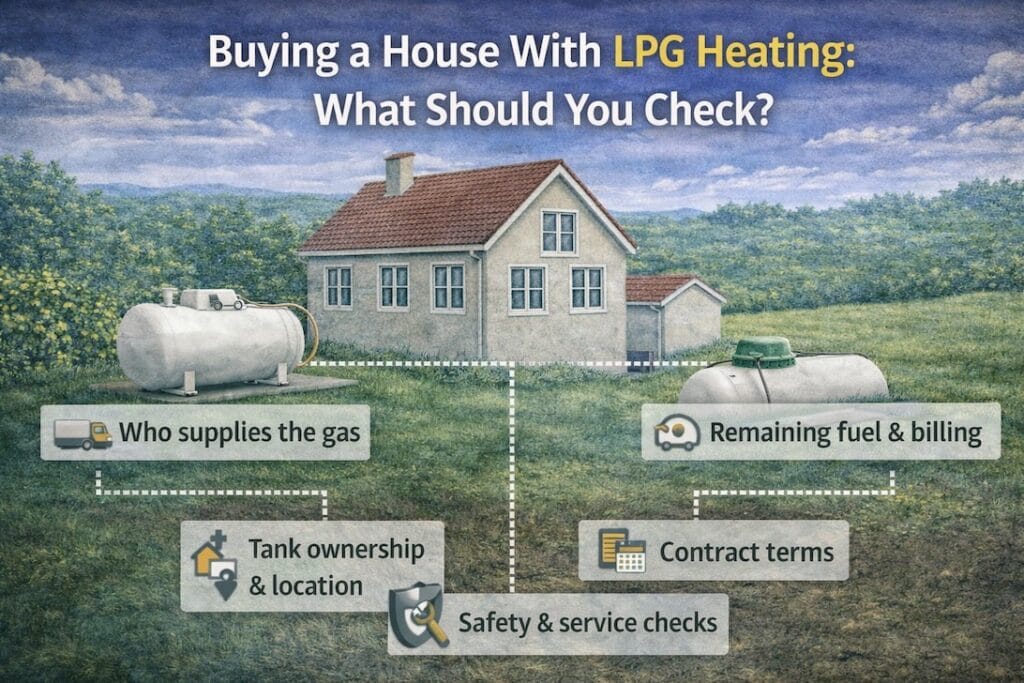
Buying a House With LPG Heating: What Should You Check?
If you are buying a house with LPG heating, it is worth checking a few practical details before you move in. Many rural and off-grid homes rely on LPG for heating and hot water, and the system can work very well, but it is not the same as moving into a property connected to mains gas.
When you are moving into an LPG house, it helps to understand who supplies the gas, who owns the tank, what happens with any fuel left in it and whether there are any ongoing contract or safety issues you need to know about.
This guide covers the main points to check so you can move in with fewer surprises.
Who supplies the gas
One of the first things to establish is who currently supplies the LPG. Unlike mains gas, where the network connection stays in place and the supplier can often be changed more simply, bulk LPG usually involves a tank at the property and a direct supply arrangement with an LPG company.
Ask the seller or agent:
- which company currently supplies the LPG
- how deliveries are arranged
- whether the tank is filled automatically or ordered manually
- when the last delivery took place
This matters because you will need to know who to contact after completion, especially if the tank level is low or the property is due a delivery soon.
Tank ownership and location
It is also important to confirm who owns the tank. In many domestic setups, the tank is owned by the supplier rather than the homeowner, but not always. Tank ownership can affect your future options and may influence how easy it is to switch supplier later on.
You should also check the tank’s location and setup. For example:
- is it above ground or underground
- is it easy to access for deliveries
- does the surrounding area look clear and well maintained
- has anything been built nearby that could affect access or spacing
A good rural property LPG check is not just about seeing that a tank exists. It is about understanding whether the arrangement looks practical, safe and straightforward to manage once you become the new owner.
Remaining fuel and billing
Before you exchange or complete, ask what happens to any fuel left in the tank. This is often one of the most overlooked parts of buying a home with LPG heating.
You should clarify:
- whether the seller expects payment for any remaining LPG in the tank
- how the amount will be measured or estimated
- whether the account will be transferred or a new one opened
- whether there are any outstanding balances with the current supplier
Some buyers agree to pay for the fuel left in the tank as part of the move, while others handle it separately. The key thing is to make sure this is discussed early so there is no confusion near completion.
It is also worth checking the current tank level. If the property is being bought in colder months, knowing whether there is enough fuel left for the first few weeks can be especially helpful.
Contract terms
If the home is currently supplied under an LPG contract, find out what the position is before you move in. This does not mean you need to become an expert in the seller’s agreement, but you should understand the basics.
Ask about:
- whether the property is tied to a specific supplier arrangement
- whether there is an existing contract period still running
- what the current price structure looks like
- whether tank rental or standing charges apply
- what notice or switching options may be available later
Even if you do not intend to switch immediately, it is useful to know what kind of arrangement you are stepping into. A low tank level or a contract nearing renewal may affect your early decisions after moving in.
Safety and service checks
As with any heating system, safety and servicing matter. When buying a property with LPG heating, it is sensible to ask about the condition of the boiler, the age of the system and any recent service history.
Things worth checking include:
- when the boiler was last serviced
- whether any recent repairs or issues have been reported
- whether the tank area is clear and accessible
- whether there are any obvious signs of damage, corrosion or neglect
- whether the seller has any paperwork relating to servicing or inspections
You do not need to assume there is a problem just because the property uses LPG. The aim is simply to treat it as part of your normal due diligence, just as you would with any other heating arrangement.
Buying an LPG-heated home can be straightforward
Buying a rural home with LPG heating does not need to be complicated. In most cases, the main thing is to ask the right questions early. Once you understand who supplies the gas, how the tank arrangement works and what the billing and contract position is, the setup becomes much easier to manage.
For many off-grid homes, LPG remains a practical and reliable way to provide heating and hot water. The important thing is to make sure you know what you are taking on before you move in.
Compare local LPG options
If you are buying a property with LPG heating and want to understand your options, comparing local supply choices is a sensible next step.
Check local LPG quotes in your area and explore your options.