
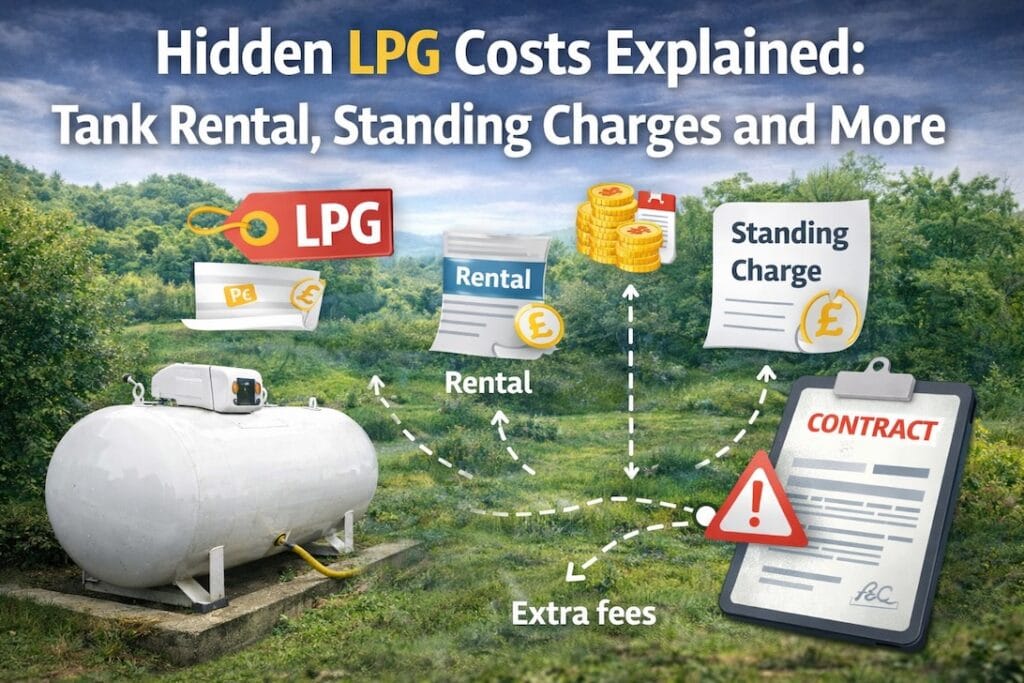
Hidden LPG Costs Explained: Tank Rental, Standing Charges and More
When comparing suppliers, many homeowners focus on the fuel rate first. That makes sense, but it does not tell the full story. Some of the biggest differences between offers come from the LPG hidden costs attached to the contract, not just the headline pence-per-litre figure.
If you want to make a fair comparison, you need to look at the total annual cost of the agreement. That includes the unit rate, any LPG tank rental, possible admin or delivery charges, and what happens when the initial contract ends.
This guide explains the extra costs that can affect value and shows how to compare LPG quotes more accurately.
Unit rate vs total annual cost
The unit rate is the amount you pay per litre of LPG delivered. It is important, but it is only one part of what you will actually spend over a year.
Two suppliers might offer rates that look similar on the surface, yet one contract may cost noticeably more once the additional charges are included. That is why the cheapest-looking quote is not always the best value overall.
When reviewing an LPG offer, think in terms of yearly spend rather than just the price per litre. A proper comparison should include:
- the fuel rate per litre
- estimated annual usage
- tank rental or service charges
- any delivery or admin charges
- the contract term and renewal conditions
If you know roughly how much LPG your property uses in a year, you can get a much clearer view of the real cost of each quote.
Tank rental explained
One of the most common extra charges in a domestic LPG agreement is LPG tank rental. In many cases, the supplier owns the tank and remains responsible for maintenance, inspections and ongoing safety checks. The rental charge covers the use of that tank as part of the supply agreement.
This means that even if two suppliers offer the same fuel rate, one may still work out more expensive if the annual tank rental is higher.
Tank rental can vary depending on the supplier, the tank type and the terms of the agreement. For example, an above-ground tank and an underground tank may not always be priced in exactly the same way, and some quotes may present the charge more clearly than others.
When comparing offers, ask:
- Is tank rental included or listed separately?
- Is the charge annual or monthly?
- Does it include inspections and maintenance?
- Will it stay the same throughout the contract?
Understanding the tank rental position is essential if you want to compare LPG quotes on a like-for-like basis.
Delivery charges or admin charges
Some LPG agreements may also include additional charges beyond the fuel and tank itself. These do not always appear prominently in marketing material, which is why they can catch homeowners out later.
Depending on the supplier and the contract, extra costs may include:
- delivery-related charges
- account or administration fees
- paper billing charges
- minimum order or minimum usage conditions
- fees linked to special delivery arrangements
Not every supplier applies the same extras, and some households may never encounter them. However, it is worth checking the quote carefully so you know exactly what is included and what is not.
A low headline rate can lose some of its appeal if several smaller charges are added over the course of the year. That is why total cost matters more than headline price alone.
Contract length and renewal pricing
Another area homeowners sometimes overlook is the contract itself. A quote might look competitive at the start, but the long-term value can depend heavily on the length of the agreement and what happens when the initial period ends.
Before accepting an offer, check:
- how long the contract runs for
- whether the rate is fixed or variable
- what notice period applies if you want to leave
- what happens to pricing at renewal
- whether any charges or terms can change after the initial period
This matters because renewal pricing can sometimes be less attractive than the initial offer. A supplier with a good introductory rate may not remain the best option if costs rise later and the contract makes it harder to move.
Looking at the agreement over its full life, rather than only at the starting rate, gives you a more realistic picture of value.
How to compare LPG quotes properly
If you want to avoid unpleasant surprises, compare quotes using the full annual picture. The most useful way to do that is to estimate your likely yearly spend with each supplier using the same household usage figure.
A sensible comparison should include:
- Unit rate: the price per litre offered
- Annual usage: your estimated consumption over the year
- Tank rental: the yearly cost of the tank arrangement
- Extra charges: any admin, delivery or service fees
- Contract terms: length, renewal terms and notice periods
Once you compare offers this way, it becomes much easier to see which quote is genuinely competitive and which one only looks good at first glance.
Look beyond the headline price
The main lesson is simple: LPG hidden costs can have a real effect on what you actually pay. The unit rate matters, but it should never be the only figure you review.
By checking the full contract, including LPG standing charge style costs, tank rental and any additional fees, you can make a more informed choice and reduce the risk of paying more than expected over the year.
Compare local LPG quotes
If you want to see what suppliers may be able to offer in your area, compare local quotes based on your property and expected usage.
Check local LPG quotes in your area to see whether you could reduce your annual LPG costs.