
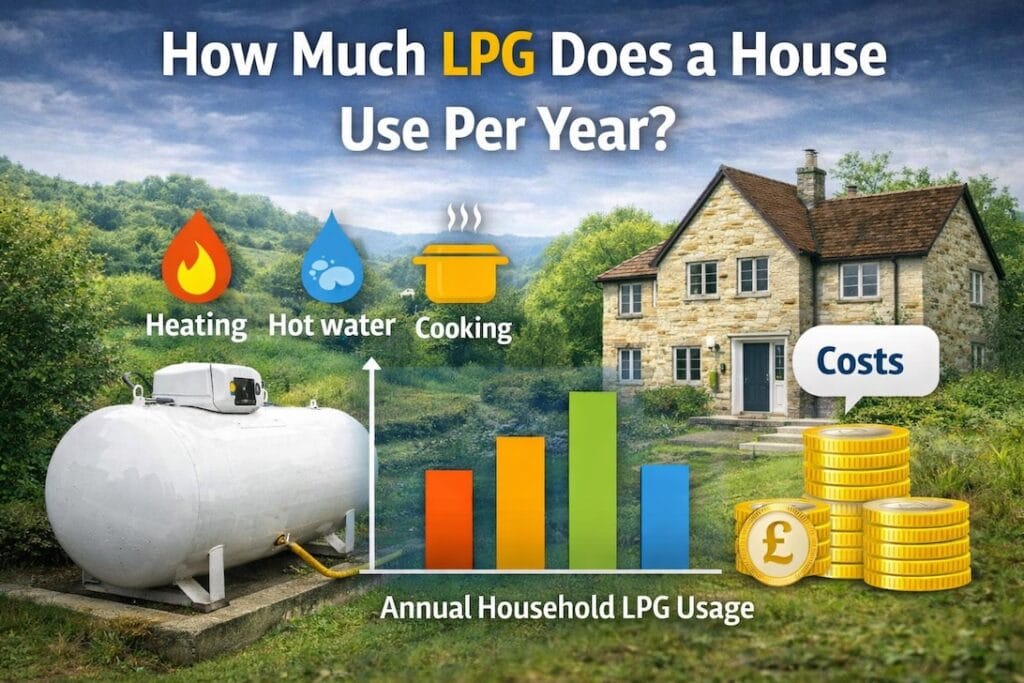
How Much LPG Does a House Use Per Year?
If you are comparing suppliers or reviewing your current bills, one of the most useful questions to ask is how much LPG does a house use in a typical year. There is no single answer that fits every property, because annual usage depends on the size of the home, how well insulated it is, how many people live there and what the LPG is being used for.
For some households, LPG may only be used for heating and hot water. For others, it may also be used for cooking. That is why LPG usage per year can vary quite a lot from one property to another.
The best way to judge your likely usage is to look at your home size, your heating habits and your actual past consumption if you have it. Once you understand that, it becomes much easier to compare quotes properly and work out whether you are getting good value.
What affects annual LPG use
Several factors influence domestic LPG consumption over the course of a year. Two homes may look similar from the outside but use very different amounts of LPG depending on how they are lived in and how energy efficient they are.
The main factors include:
- Property size: larger homes usually need more fuel to heat all rooms effectively.
- Insulation levels: loft insulation, wall insulation, glazing and draught-proofing can make a big difference.
- Number of occupants: more people generally means more hot water use and longer heating demand.
- Heating patterns: homes heated all day will usually use more than homes heated only mornings and evenings.
- Boiler efficiency: an older or less efficient system may use more fuel to produce the same result.
- Weather and location: colder, more exposed rural properties often have higher off-grid heating usage.
- Other LPG uses: if you use LPG for cooking as well as heating and hot water, total usage will be higher.
This is why estimated annual usage is always a guide rather than a fixed rule. The more information you have about your home and previous deliveries, the more accurate your comparison will be.
Small, medium and large home examples
Although every property is different, it can help to think about LPG use in broad terms.
Small home:
A smaller bungalow, cottage or modest two-bedroom property with reasonable insulation and average occupancy will usually use less LPG over the year than a larger family home. If heating is only used when needed and hot water demand is moderate, annual consumption is likely to sit at the lower end of the range.
Medium home:
A typical three or four-bedroom off-grid house with a family living in it full time will often fall into the middle range. This is where many rural domestic LPG customers sit, particularly if LPG is being used for heating and hot water throughout the year.
Large home:
A larger detached property, farmhouse or older rural home with more rooms, higher ceilings or weaker insulation will often use noticeably more LPG. If several people are living there and heating demand is high in winter, annual use can rise significantly.
These examples are only a starting point. The key point is that annual usage is shaped as much by the way the home is heated as by the number of bedrooms on paper.
Heating, hot water and cooking impact
For most households, the largest share of LPG use goes on space heating. Keeping the home warm through autumn and winter is usually the main driver of annual consumption.
Hot water is the next major factor. A household with several occupants, regular baths or high shower use will naturally consume more than a single-occupancy home with lower demand.
Cooking typically adds less than heating and hot water, but it still contributes to the overall figure. If LPG is used for a gas hob or range cooker, that should be factored into the total.
In practical terms:
- Heating is usually the biggest part of annual LPG use
- Hot water can add a meaningful amount depending on household size
- Cooking is usually a smaller contributor but still part of the total picture
This matters because two households may pay the same price per litre but still have very different annual costs depending on how much LPG they actually consume.
Why actual usage matters when comparing prices
If you are trying to work out whether a quote is good, your actual or estimated annual usage matters a great deal. A small difference in price per litre may not look dramatic at first, but over a full year it can make a noticeable difference to the total cost.
That is why comparing LPG quotes properly is about more than just spotting the lowest headline rate. You need to consider:
- your likely annual usage
- the price per litre being offered
- tank rental and standing charges
- contract length and renewal terms
- how your property and usage pattern affect overall cost
If you know roughly how much LPG your house uses per year, you can make a much more meaningful comparison between suppliers. Instead of guessing, you can estimate the likely yearly spend and compare offers on a like-for-like basis.
If you do not know your exact usage, check old delivery records, annual statements or recent supplier paperwork. Even a rough annual figure is better than comparing quotes without any usage context at all.
Understanding your home’s LPG use helps you choose better
There is no universal answer to how much LPG does a house use, because every off-grid property is different. However, once you understand the main factors behind domestic LPG consumption, it becomes much easier to judge what is normal for your home and whether your current deal is competitive.
The most useful comparison is not what another household elsewhere in the country uses. It is what your own home is likely to need over a full year and how that affects your total cost.
Compare LPG quotes based on your home and usage
If you want to see whether you could save on your LPG supply, the next step is to compare local quotes based on your property and expected annual use.
Check local LPG quotes in your area to compare options and see whether you could reduce your yearly LPG costs.