
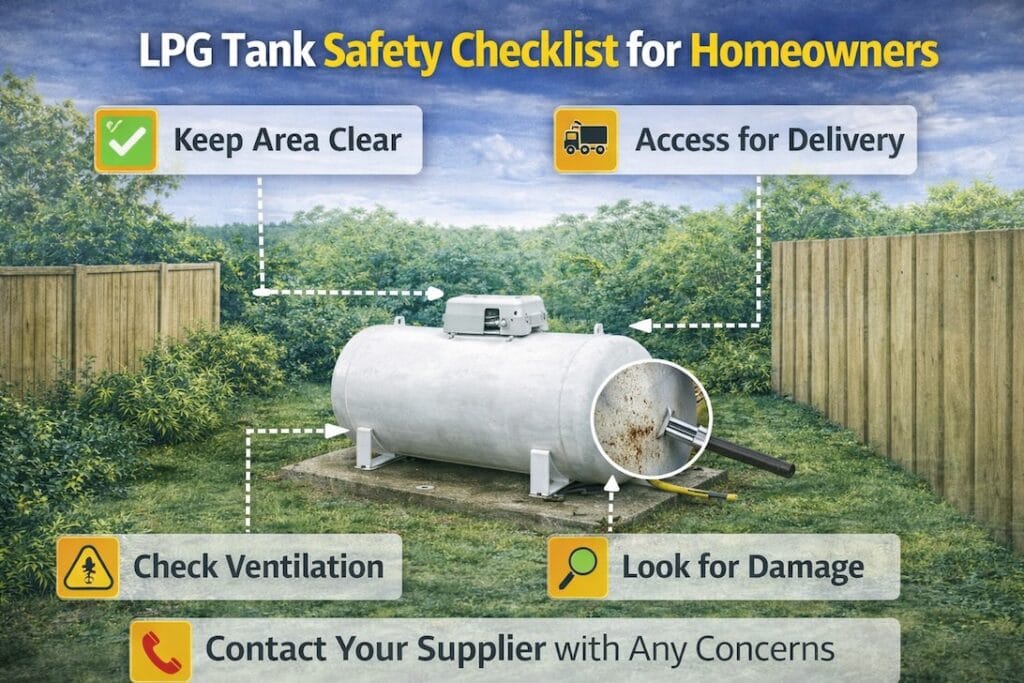
LPG Tank Safety Checklist for Homeowners
If you have bulk LPG at home, a simple safety routine can help you keep the area around the tank in good condition and reduce the chance of problems being missed. Most domestic tanks are owned and maintained by the supplier, but homeowners still have an important role in keeping the surroundings safe, accessible and free from avoidable risks.
This LPG tank safety checklist explains the main things to look out for, from keeping the area clear to spotting damage and knowing when to contact your supplier.
Keep area clear
One of the most important parts of domestic LPG tank safety is keeping the area around the tank clear and tidy. The space around the tank should not become overgrown, boxed in or used as a convenient storage area.
As a general rule, avoid leaving items near the tank such as:
- garden waste, bins or rubbish
- wood, cardboard or other combustible materials
- stacked pots, tools or outdoor furniture
- overgrown weeds, shrubs or long grass
A clear area helps maintain airflow around the tank, makes inspections easier and reduces the risk of hazards being hidden from view. It also makes it easier to spot any issue early.
Access for delivery
Your supplier needs safe and practical access when the tank is being filled. If access is restricted, deliveries may be delayed or made more difficult than they need to be.
Make sure:
- the route to the tank is not blocked
- gates can be opened if needed
- parked vehicles are not obstructing access on delivery day
- the area around the tank remains usable for normal inspection and filling
If anything has changed at the property, such as new fencing, landscaping or parking arrangements, it is worth checking that delivery access is still suitable.
Check for damage or corrosion
You do not need to inspect the tank like an engineer, but it is sensible to keep an eye out for anything that looks wrong. A quick visual check now and then can help you notice obvious problems.
Look out for things such as:
- visible damage to the tank or housing
- unusual rusting or signs of corrosion
- damage to exposed pipework or fittings
- loose covers, guards or protective parts
- any strong gas smell or unusual hissing sound
You should not attempt repairs yourself. If something looks damaged or out of place, contact your supplier and ask them to advise.
Ventilation and nearby structures
Good airflow around the tank matters. The area should not become enclosed by clutter, dense planting or structures that reduce ventilation.
You should also be mindful of nearby changes around the tank, including:
- new sheds, fences or walls
- electrical equipment installed close by
- barbecues, fire pits or bonfires nearby
- drains, gullies or low-level openings close to the tank area
If you have altered the garden or added structures since the tank was installed, it is sensible to make sure the tank still has appropriate space around it and that nothing has been placed too close.
When to contact your supplier
Homeowners should contact the supplier if they are worried about the condition, location or operation of the tank. It is always better to raise a concern early than ignore it.
You should contact your supplier if:
- you notice damage, corrosion or a fitting that does not look right
- the tank area has become overgrown or obstructed and you are unsure what is acceptable
- you are planning to add a fence, shed, wall or other structure nearby
- you suspect a leak or smell gas
- you are unsure who is responsible for a particular part of the tank setup
If you ever suspect a gas leak, follow your supplier’s emergency advice immediately and use the emergency contact details shown on the tank.
A simple homeowner checklist
Here is a quick LPG tank safety checklist you can use:
- Keep the tank area free from rubbish and combustible materials
- Cut back weeds, shrubs and long grass
- Make sure delivery access is still clear
- Check visually for damage, rust or unusual wear
- Do not place new structures or ignition sources close to the tank
- Contact your supplier if anything looks unsafe or unclear
Most homeowners will not need to do anything complicated. The main aim is to keep the area tidy, accessible and free from obvious hazards so the tank can be used and maintained safely.
Need help reviewing your LPG setup?
If you are comparing LPG options or reviewing your current arrangement, it helps to understand both price and practical setup.
Check local LPG quotes in your area and explore your options.