
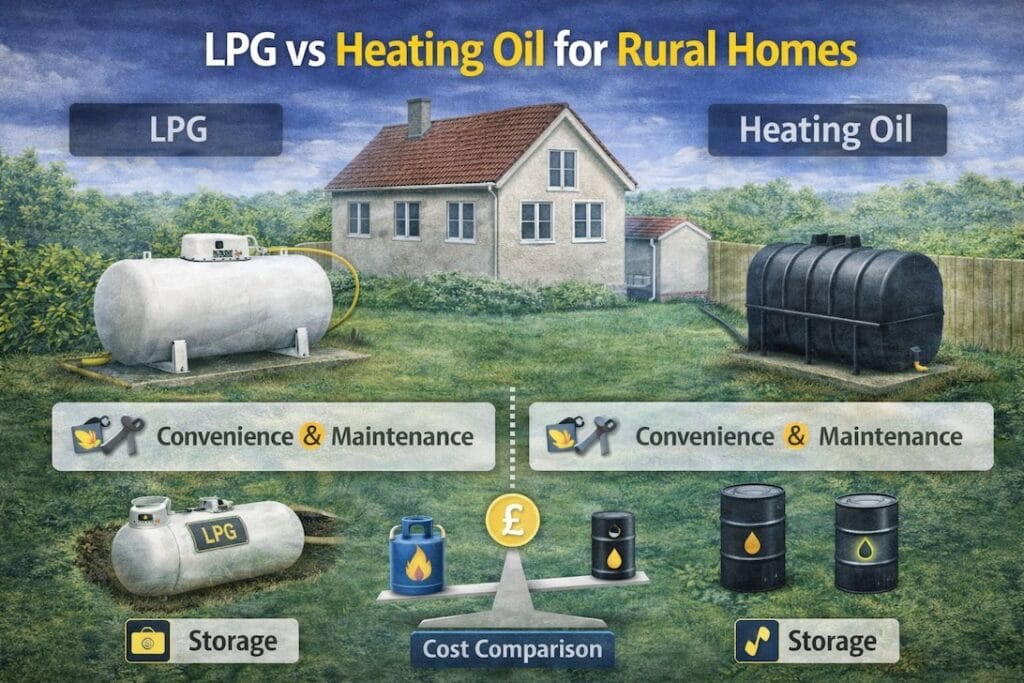
LPG vs Heating Oil for Rural Homes
If you live off the gas grid, choosing between LPG vs heating oil is a common question. Both fuels are widely used in rural homes and both can provide reliable heating and hot water. However, they differ in day-to-day convenience, storage arrangements, maintenance considerations and how they suit different types of property.
For many homeowners, the right choice comes down to more than just headline fuel price. A proper rural heating comparison should also consider how easy the system is to live with, what storage is involved and whether the setup suits the property long term.
This guide looks at the main differences between LPG and oil heating to help you make a more informed decision.
Running costs
When comparing LPG or oil heating, running cost is usually the first thing people look at. The challenge is that there is no fixed answer that applies to every rural home. Actual cost depends on the current price of the fuel, how efficient the boiler is, how well insulated the property is and how much heat the household uses over the year.
That means one fuel may look cheaper on paper at one point in time, but the real annual cost can still vary significantly from home to home.
To compare properly, it helps to look at:
- your likely annual fuel usage
- the efficiency and age of the existing boiler
- the insulation and heat loss of the property
- any extra charges linked to supply or storage
For this reason, the best comparison is usually based on your own home and your expected yearly usage, rather than a general claim that one fuel is always cheaper than the other.
Storage and maintenance
Both systems need on-site fuel storage, but the setup is different.
Heating oil is stored in an oil tank, often plastic or steel, positioned outside the home. That tank needs to remain in good condition and may need periodic inspection for age, corrosion, support and signs of leakage. If an oil tank fails, the clean-up and repair costs can be significant.
LPG is usually stored in a supplier-owned tank, either above ground or underground. In many domestic arrangements, the supplier is responsible for the tank itself, including maintenance and safety checks, while the homeowner is responsible for keeping the surrounding area clear and accessible.
From a practical point of view, homeowners often compare:
- whether they want to own and maintain an oil tank
- whether they prefer a supplier-managed LPG tank arrangement
- how visible the tank will be in the garden
- what access is needed for deliveries
Neither option is maintenance-free, but the type of responsibility is different.
Cleanliness and convenience
Another part of the comparison is how each system feels in everyday use. Many rural homeowners want a heating system that is straightforward, tidy and easy to manage.
LPG is often seen as a cleaner fuel to handle because there is no stored liquid oil inside the property and no risk of oil smell from spills or leaks around fill points and tanks. It can also be a convenient choice where homeowners want gas-style heating and cooking in an off-grid setting.
Heating oil can also work well and is very common in rural areas, but it does rely on the condition of the oil tank and associated pipework. Some homeowners are comfortable with that arrangement, while others prefer the feel of a gas-based setup.
In simple terms, convenience often comes down to:
- how much storage management you want to deal with
- whether you prefer gas-style appliances
- how important tank appearance is at the property
- whether you want supplier involvement in the storage arrangement
Property type suitability
Different rural properties can suit different heating options. A modern, well-insulated home may compare differently from a large older farmhouse or a character property with higher heat demand.
When reviewing suitability, consider:
- the size and age of the home
- how well insulated it is
- whether there is space for the chosen tank arrangement
- whether you want above-ground or underground storage
- whether the home already has a compatible boiler and pipework setup
For some homes, heating oil may remain a practical option because it is already installed and working well. For others, LPG may be attractive where homeowners want a neater setup, a gas-style feel or a simpler route when comparing alternative off-grid fuels.
When LPG may be the better fit
In some situations, LPG may be the better fit for a rural home.
This may be the case if:
- you want gas-style heating and hot water off-grid
- you prefer a supplier-managed tank rather than owning an oil tank
- you want the option of an underground tank to reduce visual impact
- you are looking for a practical alternative to oil without moving to a full electric heating setup
- you want a system that can also support gas cooking if required
For many rural households, the choice is not simply about whether LPG or oil can heat the home. Both can. The more useful question is which one better suits the property, the homeowner’s priorities and the overall running arrangement.
Which is right for your home?
There is no one-size-fits-all winner in the LPG vs heating oil debate. Oil may suit some homes because it is already in place and familiar. LPG may suit others because of convenience, storage preferences or the overall setup.
The most useful comparison looks at the full picture: annual cost, storage, maintenance, ease of use and how well the system fits the property itself.
Compare local LPG options
If you are weighing up your off-grid heating choices, comparing local LPG options can help you decide whether it could be a good fit for your home.
Check local LPG quotes in your area and explore your options.